
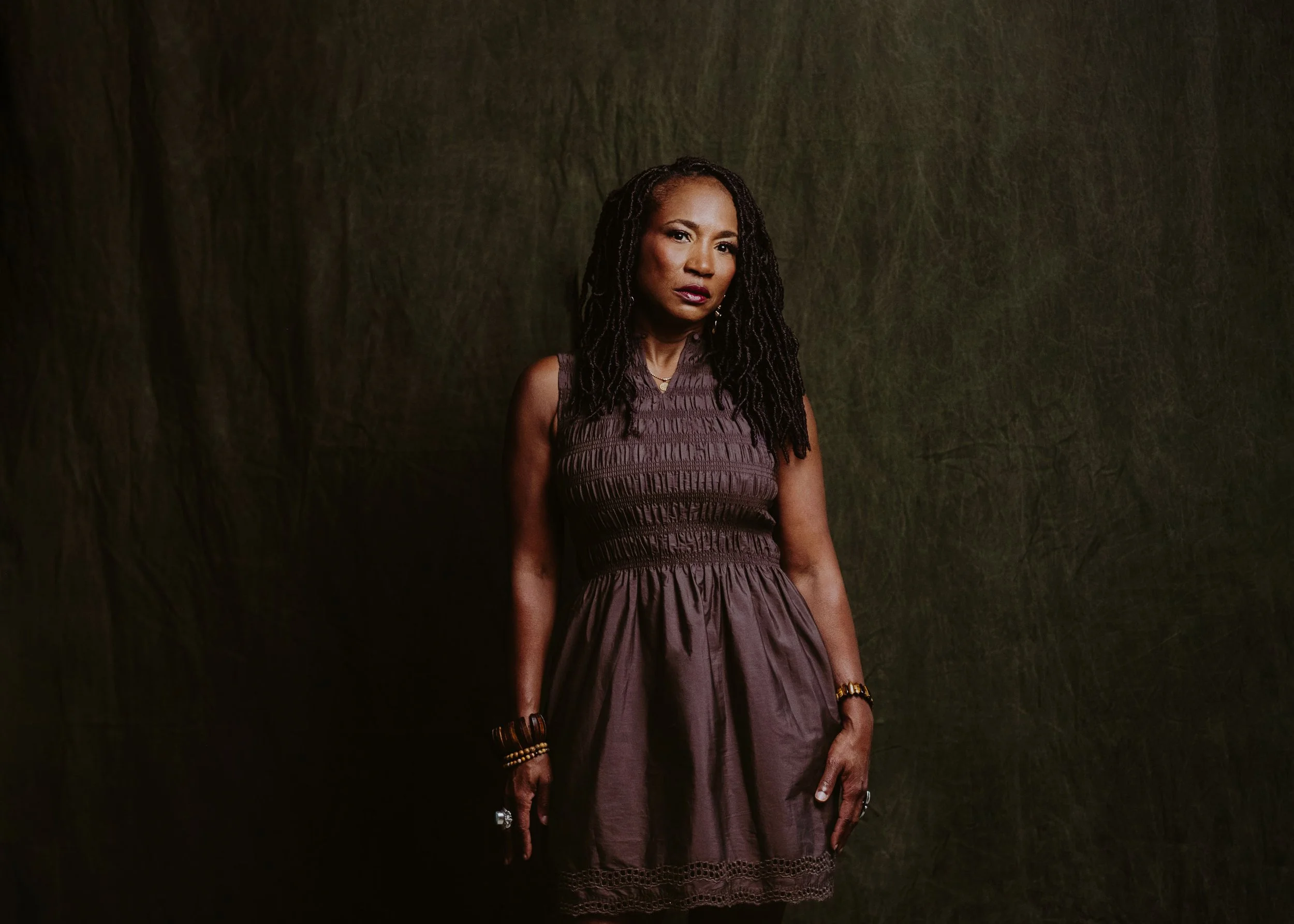
Credit: Karen Santos
Rolling Stone has called Miko Marks’ voice a “marvelous instrument that imbues each song with a kind of hard-won authority.” It’s an authority Marks has earned across a career defined by resilience, reinvention, and a refusal to let the music industry dictate where she belongs. Now, following several years of remarkable professional momentum and profound personal change, Marks enters a new chapter with Hell Or High Water, her first blues album, set for release on October 30 via Redtone Records.
Born and raised in Flint, Michigan, Marks is a granddaughter of the Great Migration, with family roots stretching back to the South. Raised by a politically active single mother and a grandmother who helped care for her while her mother worked third shift at an automotive factory, Marks grew up surrounded by women who taught her both perseverance and the importance of fighting for others. Music was equally foundational, from church conventions and family singing to the country, gospel, blues, and soul traditions that became part of a musical identity never easily confined to a single genre. “Blues is a part of who I am,” Marks says. “It’s woven into my upbringing, my experiences, and my musical journey.”
Drawing from those traditions, Hell Or High Water finds Marks reckoning with personal upheaval and a troubled world while holding fiercely to hope. Produced by longtime collaborator Justin Phipps and written by Marks and Phipps, the album grew out of a period of enormous change. In 2024, Marks’ 29-year marriage ended amicably, and shortly afterward, she began her journey with sobriety. “These songs acknowledge the darkness without surrendering to it,” she says. “I find comfort in nature, music, community, faith, memory, and the simple moments that bring me back to myself.”
That refusal to let despair overtake hope echoes throughout the album. On lead single “Death Rolls Like Thunder,” Marks looks to the Battle of Little Bighorn, also known as Custer’s Last Stand, as an example of the power of a people defending their land and their right to remain. The devil rides in on a pale horse, his army following, and death and destruction appear inevitable before the tables turn and the riders who have come to conquer are defeated. For Marks, the story is a reminder of people throughout history who have fought against the undoing of their world, finding ways to hold on, resist, and rebuild.
The title track brings that same hope into Marks’ own life. Looking back on the loss of her mother and sister, the end of her marriage, and a period when grief and isolation threatened to overwhelm her, Marks considers the strength that has carried her through. The “stone in my pocket” represents wisdom and inner strength, while the “spirits all around me” are the ancestors and loved ones who encourage her to keep going. “Despite my willingness to give up, I have not,” Marks says. “I will continue to make it through and I’ll press on through whatever comes my way.”
That hope that refuses to die runs through “It’s Alright,” which began almost accidentally when Marks sang “I ain’t gonna worry... it’s alright” over a guitar riff Phipps was playing. What began as an instinctive line took on new meaning as Marks learned to navigate life on her own after the end of her marriage. “There are moments where I question what’s next and where my path will lead,” she says. “Looking back, I can see that my strength was built during tough times, and if I just hold on, keep trusting, all will be well.”
Marks first pursued a recording career in Nashville in the early 2000s, releasing Freeway Bound in 2005 and It Feels Good in 2007. Despite critical praise and regular appearances at CMA Fest, the career she had envisioned never materialized, and Marks stepped away from recording as she and her husband raised their son. Fourteen years would pass before she released another album. In 2021, she returned with Our Country, bringing the gospel, blues, Southern rock, and country influences at the heart of her musical identity together more fully than ever before.
The success Marks had spent years fighting for finally arrived with 2022’s Feel Like Going Home. The album broke into the Top 10 on the Americana charts and launched the most expansive chapter of Marks’ career yet, including her Grand Ole Opry debut that year. In the years since, she has returned to the Opry stage multiple times, appeared at Stagecoach, Hardly Strictly Bluegrass, MerleFest, and Ottawa Bluesfest, and shared stages with Tedeschi Trucks Band, Little Feat, The War and Treaty, Marc Broussard, and more.
Audiences aren’t the only ones drawn to Marks. In 2024, she expanded Feel Like Going Home with a deluxe edition featuring Buddy Miller, Tré Burt, Melissa Carper, the Fisk Jubilee Singers, and guitarist Mark Lettieri. She has also become a favorite among her fellow artists, joining Molly Tuttle, Margo Price, Little Feat, Los Lobos, Buddy Miller, the Blind Boys of Alabama, and others onstage.
More than two decades after Marks first set out to build a life in music, Hell Or High Water finds her somewhere she could not have predicted, personally or professionally. “I have found a new internal freedom in recent years, and it’s the best I can ever remember feeling,” Marks says. “I’m filled with gratitude for life and all that I am a part of now. I don’t know exactly where I’m headed, personally, musically, etc., but that’s alright with me.”